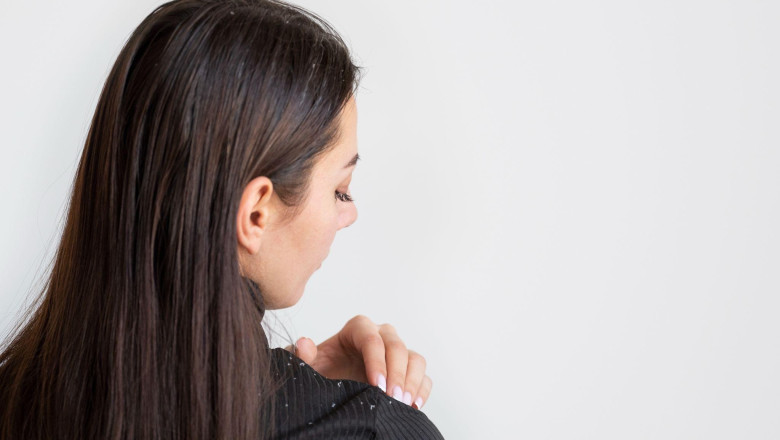
hair on your pillow or in the shower drain, there's a real connection worth understanding. Dandruff doesn't directly pull hair out of your scalp, but what happens underneath the surface can absolutely set off a cycle that leads to thinning and shedding over time.
What Dandruff Actually Is
Dandruff isn't just dry skin. In most cases, it's caused by an overgrowth of a yeast-like fungus called Malassezia, which naturally lives on the scalp. When it multiplies beyond normal levels, it irritates the scalp and speeds up the skin cell turnover cycle. Instead of shedding gradually and invisibly, skin cells clump together and fall off as visible flakes.
This process is almost always accompanied by inflammation, even when you can't see or feel it obviously. That low-grade, chronic inflammation is where the real trouble for your hair begins.
The Inflammation Connection
Hair grows from follicles, and follicles are sensitive structures. When the scalp is inflamed — even mildly — it creates an unfriendly environment around these follicles. Blood circulation to the area can be affected, and the nutrients that hair roots depend on don't reach them as efficiently.
Over time, follicles that are repeatedly exposed to this kind of inflammation can weaken. They may start producing thinner, shorter strands before eventually entering a resting phase earlier than they should. This is one of the reasons people with chronic, untreated dandruff often notice gradual hair thinning rather than sudden patches of loss.
Scratching Makes Things Worse
One of the most overlooked parts of this cycle is the physical damage caused by scratching. When the scalp itches — which it almost always does with dandruff — the natural response is to scratch. This might feel relieving for a moment, but it causes micro-tears in the scalp skin.
These small injuries disrupt the follicle environment, introduce bacteria, and increase local inflammation further. Repeated scratching can also physically weaken the hair shaft near the root, making strands more prone to breakage. So the hair fall you're seeing might be a mix of weakened roots and mechanically damaged strands — both stemming from the same source.
Product Buildup and Blocked Follicles
People dealing with dandruff often try multiple anti-dandruff shampoos, oils, and home remedies at once. While the intention is to control flaking, layering heavy products can sometimes lead to buildup along the scalp and around the follicle openings. When follicles are partially blocked, it interferes with normal hair growth and can increase shedding.
This doesn't mean you should avoid treating dandruff — the opposite is true. But it highlights why the approach matters. Using harsh products too frequently can strip the scalp of its natural oils, which then triggers more sebum production, feeding the Malassezia further and worsening the original problem.
Why Treating Only the Flakes Isn't Enough
Most over-the-counter dandruff treatments focus on reducing flaking and fungal activity, which is a good first step. But if hair fall has already started, managing the surface symptoms alone often doesn't reverse the underlying damage to follicles.
This is where a more layered approach becomes necessary. Some treatment frameworks like Traya work by addressing both the scalp condition and the hair loss together — looking at what's driving the dandruff internally (diet, stress, hormonal shifts) alongside the topical environment. That kind of root-cause thinking tends to produce more lasting results than rotating between shampoos.
The internal factors often get ignored. Things like poor gut health, nutritional deficiencies (especially zinc, B vitamins, and iron), and chronic stress can all make the scalp more vulnerable to fungal overgrowth and inflammation in the first place.
Final Thoughts
Dandruff and hair fall rarely feel connected when you're living with both. One seems like a scalp issue, the other feels like a separate problem. But once you understand that chronic scalp inflammation weakens follicles, that scratching causes physical damage, and that untreated dandruff creates a progressively worse environment for hair growth — the link becomes clear.
The path forward isn't just picking the right shampoo. It's understanding why your scalp is reacting this way and addressing that honestly, from the inside out.